
The Argument You Don't Want to Have in January
Put this conversation off until the first freeze-thaw cycle of the season, and here's what you're risking: a tenant standing in the driveway at 6 a.m. with a door that won't budge because the spring finally gave out, a landlord blindsided by a $300-$600 spring replacement bill nobody budgeted for, or worse, someone trying to force a stuck door open and getting hurt. None of that is hypothetical around here. Older housing stock, salt-heavy winters, and doors that have been doing their job since before anyone currently living in the house moved in — that's a recipe for exactly this kind of surprise. Settle who's responsible for what before the snow flies, not after.
The General Rule (And Why Your Lease Still Matters More)
In most rental situations, the split works like this: the landlord is responsible for structural and mechanical repairs — a broken spring, a failing opener, a door off its track, anything that's a result of normal wear or age. The tenant is responsible for day-to-day care — keeping the door clean, reporting problems promptly, and not causing damage through misuse (backing a car into it, forcing a door that's clearly stuck, letting kids play with the opener remote until it breaks).
That said, this is a general pattern, not a guarantee. The actual answer lives in the lease. If your lease is silent on garage doors specifically, that's worth fixing with an addendum before move-in, not after something breaks. A two-sentence clause — who calls the repair company, who pays, how fast repairs happen — saves both sides a miserable argument later.
Where It Gets Gray
- Tenant waited too long to report a problem. A grinding noise that gets ignored for three months and turns into a snapped cable is a different conversation than a sudden failure.
- Damage from someone else's negligence. A contractor backs into the door, a guest hits the opener wrong — that's not automatically on the landlord's dime.
- Cosmetic vs. functional. A dented panel that still opens and closes fine is a different priority than a door that won't seal and is letting cold air into the garage all winter.
When in doubt, put it in writing. A text with a photo and a timestamp ("noticed this grinding noise today, door still works") protects both people if the question of who-knew-what-when ever comes up.
What to Inspect at Move-In (Before You Sign Anything)
Do this walkthrough together, landlord and tenant, phone camera in hand. It takes fifteen minutes and prevents months of finger-pointing.
- Springs and cables. Look for visible rust, fraying, or gaps in the coil. On older homes with original doors, this is often the first thing to go.
- Rollers and track. Check for rust buildup, bent track sections, or rollers that look worn down on one side — common after a few seasons of salt and freeze-thaw cycling through the garage floor.
- Weatherstripping along the bottom and sides. Cracked or missing seals mean cold air, moisture, and eventually ice creeping in — a real issue once nor'easters start rolling through.
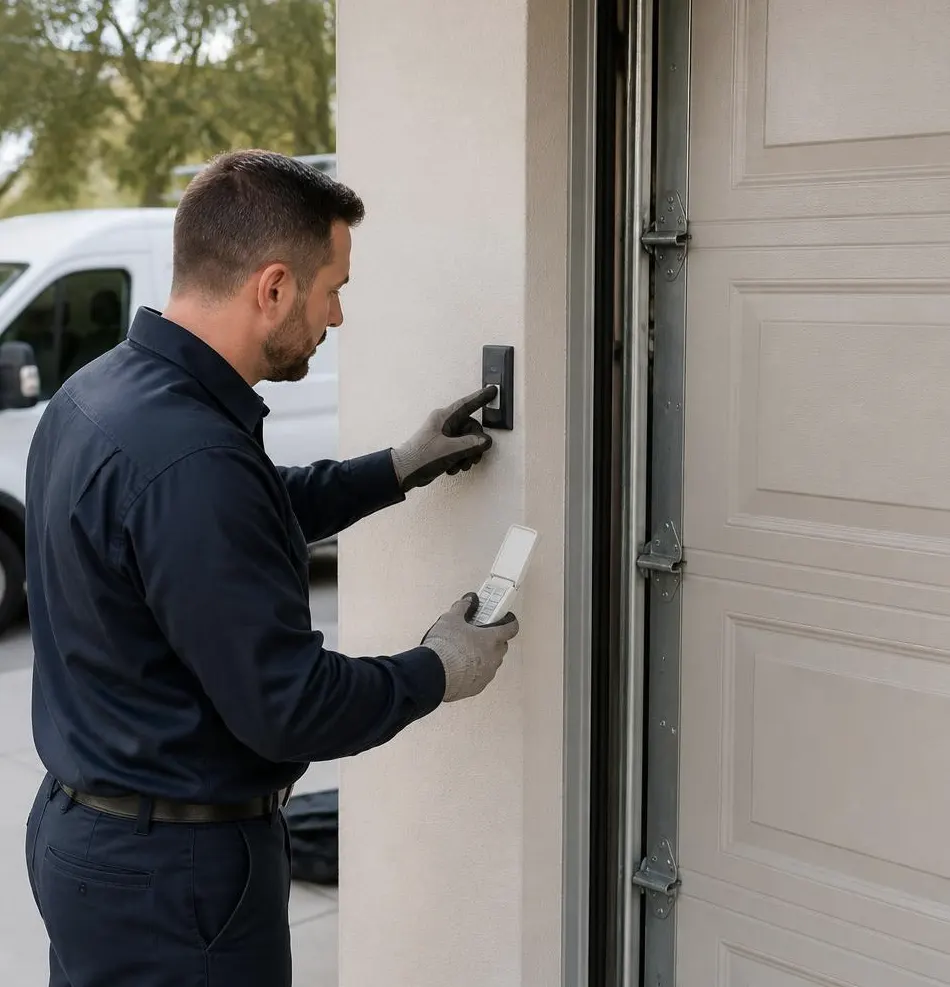
- Opener function and photo-eye sensors. Does it respond to the remote and wall switch? Do the sensors near the floor actually stop the door if something blocks the beam? This is a safety item, not a nice-to-have.
- Panel condition. Dents, rust spots, or daylight showing through seams should be photographed and noted now, so nobody gets blamed for damage that was already there.
- Manual operation. With the opener disconnected, lift the door by hand. It should move smoothly and stay roughly where you leave it. If it slams down or feels heavy, the springs are likely out of balance — a repair issue, not a tenant-maintenance issue.
Take photos of everything, note the date, and send a copy to the other party by email or text — something with a timestamp. This isn't about distrust; it's the same reason you take photos of a rental car before you drive it off the lot.
A Little Seasonal Maintenance Prevents a Lot of Arguments
Whoever's responsible for upkeep under the lease, a few basics matter more as the weather turns: keep the track clear of road salt and debris, don't let ice build up around the bottom seal, and don't force a door that's sticking — that's usually a sign something's already failing, and pushing through it tends to turn a small fix into a bigger one.
When to Call North Windham Garage Door
If the move-in walkthrough turns up worn springs, a rough-running opener, or a door that's clearly been limping along for a while, that's the moment to bring in a professional before move-in day instead of after. We offer straightforward Garage Door Maintenance visits that catch the small stuff — rust, loose hardware, worn rollers — before it becomes a landlord-tenant dispute, and Spring Replacement when a door is clearly past the point of a quick fix. We'll give both parties a clear, honest read on what's wear-and-tear versus what's a real repair need, in writing if that helps settle things.
If you're a landlord or tenant anywhere in North Windham, Willimantic, Mansfield, Coventry, Columbia, Lebanon, Chaplin, or Windham, CT and want a second opinion before move-in or before winter really sets in, give North Windham Garage Door a call. We'll tell you what you're actually looking at — no upsell, just a straight answer.